We earn a commission if you buy through our links, at no extra cost to you.
Best Chainsaw for Cutting Trees and Firewood
Matching a chainsaw to bigger trunks and firewood: bar length vs diameter, engine size or battery voltage, and when to hire a certified arborist, with four saws.
At a glance
For bigger trunks and firewood, the Husqvarna 460 Rancher is a 60.3 cc gas saw that handles a 24-inch bar. The DEWALT DCCS677Z1 is a 20-inch 60V battery option, and the Husqvarna 450X Rancher is a 50.2 cc gas saw. For large or hazardous trees, hire a certified arborist.
Cutting firewood and cutting trees are two jobs that people lump together. Bucking a pile of logs into stove lengths is steady, repeatable work, and the saw you need depends on how wide the wood is and how much of it you cut. Felling a standing tree is a different matter: the saw matters less than the judgment. This guide helps you size a saw for bigger wood, then points out where a saw is the wrong answer and a professional is the right one.
We do not run these saws ourselves. Specs come from the makers’ product pages and public safety sources listed at the end. Some figures are marketing claims, and we say so. We show no prices; use the Amazon buttons for current pricing. For the full field of nine saws, see our 2026 chainsaw ranking.
Start With the Diameter of the Wood
The bar length decides what a saw can cut in one pass. A common rule of thumb is a bar a few inches longer than the widest log, because not all of the bar’s length is usable. You cut in from one side, then flip or roll the log for wider pieces. A 20-inch bar usually handles logs up to a bit under that width in one pass.
The makers publish bar ranges. Husqvarna lists a recommended bar length of 13 to 20 inches for the 450X Rancher and 13 to 24 inches for the 460 Rancher, and says to choose the 460 if you regularly cut wood diameters exceeding 18 inches. DEWALT and EGO battery saws in this guide use 20-inch bars.
A longer bar asks more of the engine or motor, and it weighs more at the front. Do not buy more bar than the wood needs. If most of your wood is under 12 inches wide, a smaller saw such as the EGO CS1815 is lighter and easier to control.
Engine Size and Battery Voltage
For gas saws, displacement is the shorthand for power. The Husqvarna 450X Rancher is 50.2 cc with 3.4 hp, and the 460 Rancher is 60.3 cc with 3.62 hp, according to Husqvarna. Husqvarna says the 460 is designed to run a 24-inch bar, while the 450X below it is best suited to a maximum of 20 inches.
For battery saws, voltage and battery size play the same role. The DEWALT FLEXVOLT 60V MAX DCCS677Z1 lists a peak of 4 HP with the included DCB615 battery, and DEWALT claims 20 percent more peak power than a 50.2 cc gas chainsaw. EGO describes its 56V CS2005 as a 55cc gas equivalent. Treat these comparisons as the makers’ claims, not independent measurements.
Firewood: Volume Decides Gas or Battery
Think in terms of how much wood you cut and how many hours:
- A few weekends a year, logs up to about a foot: a 20-inch battery saw can do the job. EGO says the CS2005 makes up to 135 cuts on a 6x6 with its 6.0Ah battery, which gives a sense of how many cuts one charge covers. A spare battery doubles the work time.
- Several cords a season, wider rounds: gas runtime and bigger bars are easier to live with. Husqvarna’s 460 lists a 24-inch bar capacity and an adjustable oil pump for long bars.
- Mixed use, with small trees and storm cleanup: a 50 cc gas saw or a 60V battery saw sits in the middle.
Gas or High-Voltage Battery
Gas saws start with a pull cord and need mixed fuel. Husqvarna lists 50:1 for the 460. In exchange you get runtime that a tank of fuel measures in hours, and you can refill in a minute. Battery saws cut down on noise and fuel handling, but the pack caps your runtime and ties you to one brand’s platform. DEWALT says FLEXVOLT batteries also run its 20V MAX tools, and EGO says all of its 56V outdoor tools share one battery.
Safety Rules for Bigger Wood
Bigger wood adds energy and risk to every cut. Oregon calls the upper tip of the bar the kickback danger zone and says never to cut with it. OSHA’s chain saw QuickCard says to start the saw on the ground or on firm support with the chain brake engaged, never to drop start, to keep hands on the handles and to watch for branches under tension, which may spring out when cut. It also says to fuel only a cool saw and to start at least 10 feet from the fueling area.
Protective gear is not optional. OSHA’s QuickCard lists hand, foot, leg, eye, face, hearing and head protection. Wear chaps or cut-resistant leg protection, a hard hat with a face shield, hearing protection, gloves and sturdy boots. Husqvarna lists 105 dB(A) at the operator’s ear for the 460 Rancher and 106 dB(A) for the 450X.
One note about the standards: Oregon says that, under ANSI B175.1, gasoline saws under 3.8 cubic inches (62 cc) must meet low-kickback provisions, while larger ones may not and carry a warning. OSHA’s logging standard, 29 CFR 1910.266, applies to logging employers: it requires a chain brake and compliance with ANSI B175.1 for gas saws in service. It is not a legal duty for homeowners, and we do not say that any given model meets it unless the maker does.
When to Hire a Certified Arborist
This is where a saw guide has to be honest. A bigger saw does not make a bigger tree a safer job. OSHA lists trees on unstable ground or steep slopes, trees with a heavy lean, trees with stem or root rot, trees known to split and cutting above shoulder height or from a ladder or tree as higher-risk work, and notes that accidents occur when operators attempt tasks beyond their skill or training.
Call a licensed, insured tree service or a certified arborist for:
- large trees whose trunks are wider than your bar;
- any tree near a house, shed, fence or road;
- any tree near power lines, where you should also call the utility;
- storm-damaged trees, hung-up limbs and leaning trees with wood under tension;
- trees with rot, cracks or split trunks.
On a felling job, OSHA’s fact sheet says other workers should be twice as far from the tree as its height, and it advises you to identify electrical lines and “hangers” or “widow-makers” overhead before any cut. This guide gives no felling steps. Instead, take an in-person class and begin with trees on the ground.
Husqvarna 460 Rancher — The Heavy Hitter for Big Wood
For firewood cutters who regularly handle wood over 18 inches and want a gas saw that runs a 24-inch bar. Premium tier of our ranking.
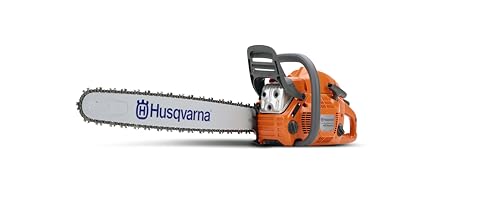
According to Husqvarna, the 460 Rancher is a 60.3 cc X-Torq engine with 3.62 hp, a chain speed of 65.62 ft/s and a 3/8-inch X-Cut chain on a 24-inch bar on this listing. It weighs 13.2 lb without the cutting equipment, and Husqvarna lists 105 dB(A) at the operator’s ear. Air purge, Smart Start, LowVib dampeners and an inertia-activated chain brake are listed, and a decompression valve eases pulling the cord. Fuel is mixed at 50:1. California buyers should check emissions status; CARB status per model is not on the pages we read. See the 460 Rancher profile.
DEWALT DCCS677Z1 — A 60V Battery Saw With a 20-Inch Bar
For firewood and storm cleanup users who want gas-class cutting without fuel, and who may share batteries with DEWALT 20V MAX tools. Premium tier of our ranking.
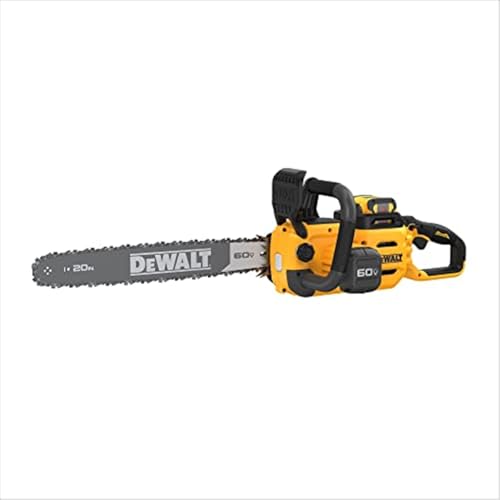
DEWALT lists a brushless FLEXVOLT 60V MAX saw with a 20-inch bar and a kit with a DCB615 battery and charger. It claims a peak of 4 HP with that battery, 20 percent more peak power than a 50.2 cc gas saw and a 17-inch white oak log cut in as little as 15 seconds. DEWALT’s page lists a chain brake and a low-kickback bar and chain, and it does not publish a weight for this saw, so we give none. The DCB615 can power 20V MAX tools as well. See the DCCS677Z1 profile.
Husqvarna 450X Rancher — A Step Down in Size and Cost
For homeowners who cut firewood and storm wood with a 20-inch bar and want a lighter gas saw with AutoTune. Mid-range tier of our ranking.
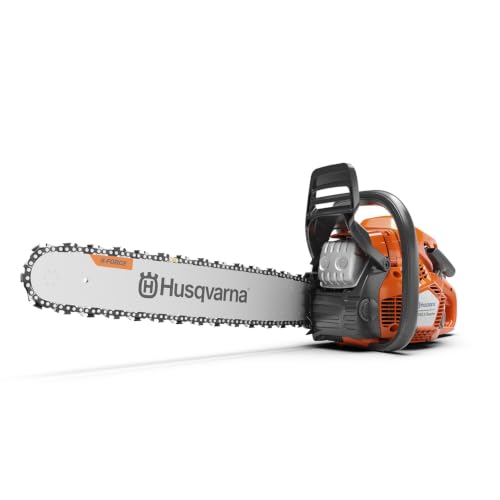
The 450X Rancher is a 50.2 cc X-Torq engine with AutoTune, 3.4 hp and a 20-inch bar with a .325-inch pitch chain, according to Husqvarna. It weighs 11.2 lb without cutting equipment and lists 106 dB(A) at the operator’s ear. Husqvarna claims it starts 40 percent more easily, hot or cold, and lists Smart Start, air purge and an automatic oil pump. It is a good middle ground for wood up to a bit under 20 inches. See the 450X Rancher profile.
EGO POWER+ CS2005 — Battery Saw for Moderate Firewood
For firewood users who want a quiet 20-inch battery saw with an automatic chain brake, and who use or plan to use EGO 56V tools. Mid-range tier of our ranking.
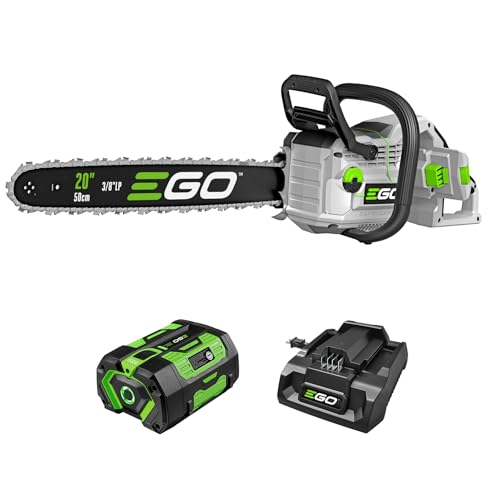
EGO lists a 20-inch bar, a 56V ARC Lithium system with a 55cc gas equivalent rating and chain speed up to 25 m/s. The CS2005 kit includes a 6.0Ah battery and charger. EGO says up to 135 cuts on a 6x6 with that battery, with a digital display, LED light and an omnidirectional auto chain brake in addition to the kickback brake. EGO does not publish a weight for this saw on its page, so we give none. See the EGO CS2005 profile.
How to Choose
- Regular wood over 18 inches: the Husqvarna 460 Rancher.
- No fuel, big bar, DEWALT batteries: the DEWALT DCCS677Z1.
- Mid-size gas saw for most firewood: the Husqvarna 450X Rancher.
- EGO owner who wants a 20-inch saw: the EGO CS2005.
- A large or hazardous tree: a certified arborist, not a saw.
See our full ranking for the whole field.
Sources
- OSHA QuickCard: Chain Saw Safety
- OSHA Fact Sheet: Working Safely with Chainsaws
- OSHA 29 CFR 1910.266 Logging operations
- Oregon: ANSI B175.1 and replacement chain
- Oregon: Chainsaw safety and the kickback danger zone
- Husqvarna 460 Rancher official product page
- Husqvarna 450X Rancher official product page
- DEWALT DCCS677Z1 official product page
- EGO POWER+ 20” Chain Saw (CS2000 / CS2005) official product page
Frequently asked questions
What size chainsaw do I need to cut trees and firewood?
Match the bar to the wood. A common rule of thumb is a bar a few inches longer than the widest log, because the saw cuts in from one side. Husqvarna says to choose the 460 Rancher, which runs a 24-inch bar, if you regularly cut wood over 18 inches in diameter. For logs and trees a foot across or less, a 16- to 20-inch bar on a 50 cc class gas saw or a high-voltage battery saw is usually enough.
Is a battery chainsaw strong enough for firewood?
The larger battery saws can handle it in moderate amounts. DEWALT says its 20-inch FLEXVOLT saw cuts a 17-inch white oak log in as little as 15 seconds, and EGO says its 20-inch saw makes up to 135 cuts on a 6x6 with a 6.0Ah battery. Both are manufacturer figures under their own conditions. For all-day cutting, gas saws and spare batteries are the usual answer.
How big a tree can I cut down myself?
We do not give felling instructions, and size alone is not the test. OSHA lists trees with a heavy lean, trees on unstable ground or steep slopes, and trees with stem or root rot among the higher-risk jobs. Hire a licensed, insured tree service or a certified arborist for large trees, trees near a house, fence or power lines, and storm-damaged trees under tension.
How far away should other people stay when a tree is cut?
OSHA's fact sheet on chainsaws says other workers should be twice as far from the work as the height of the trees being felled. OSHA's logging standard, which applies to logging employers, uses two tree lengths between adjacent work areas. Treat that as a minimum for family, neighbors and helpers too.
Gas or battery for cutting firewood?
Gas gives longer runtime and bigger bars. Battery saws start instantly, make less noise and need no fuel mix, and the high-voltage ones reach 20-inch bars. Decide by volume: a few weekends of cutting suits a 20-inch battery saw with a spare pack, while heavy winter-long cutting favors gas.
What protective gear do I need for bigger wood?
OSHA's QuickCard lists hand, foot, leg, eye, face, hearing and head protection. That means chaps or other cut-resistant leg protection, a hard hat with a face shield, ear protection, gloves and sturdy boots. Husqvarna lists 105 dB(A) at the operator's ear for the 460 Rancher, so hearing protection matters.